Emergency Housing Assistance: Where to Get Help Tonight and This Month
Emergency housing assistance when you have nowhere safe to sleep: call 211, get a coordinated entry assessment, find a shelter bed, ask about motel vouchers and rapid rehousing, and use the hotlines for veterans, youth, older adults and survivors of abuse.

The short version
Call 211 tonight and ask for shelter and your area's coordinated entry contact. HUD counts you as homeless if you lose your place within 14 days with nowhere to go. ESG can fund motel vouchers when no shelter fits and rapid rehousing rent for up to 24 months. Veterans: 877-424-3838. Abuse: 1-800-799-7233.
If you need emergency housing assistance because you have nowhere safe to sleep tonight, call 211 first. It is free and confidential, it runs 24 hours a day, and the person who answers can tell you which shelters have beds and who runs intake for homeless services where you are.
Emergency housing assistance means short-term help for people without a safe place to stay.
It is not one program. It is a chain of local services, mostly paid for by HUD and the VA, running from a shelter bed tonight to a motel voucher, a rapid rehousing lease and, later, a spot on a voucher waitlist. This guide walks through each link in that chain, in the order most people meet them.
Every rule below comes from federal regulations on eCFR (24 CFR Part 576), a state statute, or the agency that runs the hotline, checked on November 13, 2026. If your problem is paying rent you still owe rather than finding a bed, our guide to help paying rent is the better starting point.
Key Takeaways
- Call 211 or use HUD’s Find Shelter tool tonight. Ask for the “coordinated entry” contact, because that is the front door to most shelter, motel and rapid rehousing money.
- HUD treats you as homeless if you will lose your place to stay within 14 days, have nowhere else lined up and have no money or people to fall back on.
- In shelters paid for by HUD’s Emergency Solutions Grants (ESG), missing paperwork must not stop you from being admitted right away.
- ESG can pay for a motel voucher when no shelter bed fits, and rapid rehousing can cover up to 24 months of rent in a 3-year period.
- Separate lines exist for domestic violence (1-800-799-7233), youth (1-800-786-2929), veterans (877-424-3838) and older adults (1-800-677-1116).
Do you count as homeless? The 14-day test for emergency housing assistance
You count as homeless for most federal emergency programs if you are sleeping somewhere not meant for people, like a car or park, or staying in a shelter. You also count if you will lose your current place within 14 days, have no next place identified, and lack the money or people to get one.
That second group matters. Many people assume they must already be on the street before anyone will help. HUD’s definition in 24 CFR 576.2 says a household also qualifies when its “primary nighttime residence will be lost within 14 days of the date of application for homeless assistance.”
The first group is spelled out too. It covers a “car, park, abandoned building, bus or train station, airport, or camping ground,” plus shelters and motels paid for by a charity or a government program for people with low incomes.
There is a wider band called “at risk of homelessness.” It covers households under 30 percent of area median income with a trigger such as a written notice to leave within 21 days, or living in someone else’s home because of money trouble. That band unlocks prevention help, not shelter beds.
Why this matters tonight: when you call, describe your situation in those terms. “I have to be out of my friend’s apartment by Friday and have nowhere else to go” tells the worker you meet the 14-day test far better than “I need housing.”
1. Call 211 or use HUD’s Find Shelter tool tonight
Dial 211 from any phone. The United Way 211 network says every call is “completely confidential” and staff keep it running 24/7. Ask for tonight’s shelter options and the coordinated entry contact for your county. HUD’s online Find Shelter map is a backup.
211 is a referral line, not a shelter. It knows which programs exist, what hours intake runs and which ones are full. It cannot promise a bed, but it can save you hours of calling places that have no room.
HUD’s Find Shelter tool covers “housing, shelter, health care, and clothing resources in communities across the country.” Enter a location and it maps nearby options. Use it when you cannot hold a phone call, or to double-check an address 211 gave you.
If you are in immediate danger, call 911 before anything else. If you are fleeing abuse, a veteran, under 18, or an older adult, skip ahead to the section for your group, because each has its own line with staff trained for it.
What to say in the first two minutes
- Where you are right now (city and ZIP code) and whether you are safe there tonight.
- Who is with you: adults, children, a partner, pets, or someone with a disability or medical need.
- When you lose your current place, if you still have one, and whether you have a written notice.
- Whether you have a car, a phone that can take calls back, and any income.
- Whether you are a veteran, fleeing violence, or under 25. These open separate programs.
2. Ask for your area’s coordinated entry assessment
Coordinated entry is the single intake your local Continuum of Care (CoC) uses to decide who gets shelter, rapid rehousing and supportive housing. Federal rules require every CoC to run one. You do one assessment, and your answers place you on a shared community list instead of applying to each program separately.
A Continuum of Care is the local planning body, usually a mix of the city or county and nonprofits, that receives HUD homeless funding. Under 24 CFR 578.7(a)(8), each one must “establish and operate either a centralized or coordinated assessment system.”
The rule also says the system must be “easily accessed,” “well advertized,” and use “a comprehensive and standardized assessment tool.” In practice that means a hotline, a walk-in access point, or both. 211 almost always knows the number.
What the assessment asks
HUD does not publish one national question list. Its data manual says each CoC may “define their own assessment questions,” and may use different sets for families and single adults. What HUD does fix is the shape of the process.
HUD’s coordinated entry data standard names two levels. A crisis needs assessment is an “initial, short, focused assessment” to resolve emergency needs “including shelter.” A housing needs assessment is “more in-depth” and points you toward longer-term help.
Either one can happen by phone, virtually or in person. Expect questions about where you slept last night, how long you have been without a home, health conditions and disabilities, income, household members and safety. Answer honestly; the answers are used to rank need, not to judge you.
What happens after you are assessed
The result is recorded as either “placed on prioritization list” or not. Being on the list does not mean a unit is waiting. It means you are in line for whatever the community has, ranked by its own written priorities, which often weigh disability, time spent homeless and vulnerability.
Keep your phone charged and check in with the access point on the schedule they give you. People who cannot be reached when a slot opens are often skipped. If your number changes, tell them the same day.
3. Get into an emergency shelter, even without paperwork
Each community decides whether its shelter beds are walk-in, by phone reservation or by referral through coordinated entry, so ask 211 which applies near you. In shelters funded by HUD’s ESG program, federal rules say lack of paperwork must not stop you from being admitted right away.
The exact words in 24 CFR 576.500 are that “lack of third-party documentation must not prevent an individual or family from being immediately admitted to emergency shelter.” The program can document your status afterward.
That rule covers ESG-funded shelters only. Shelters run purely on private or church money set their own intake rules, and some do ask for ID. If you have none, say so on the phone and ask whether it is required. Do not skip a shelter on the guess that it will turn you away.
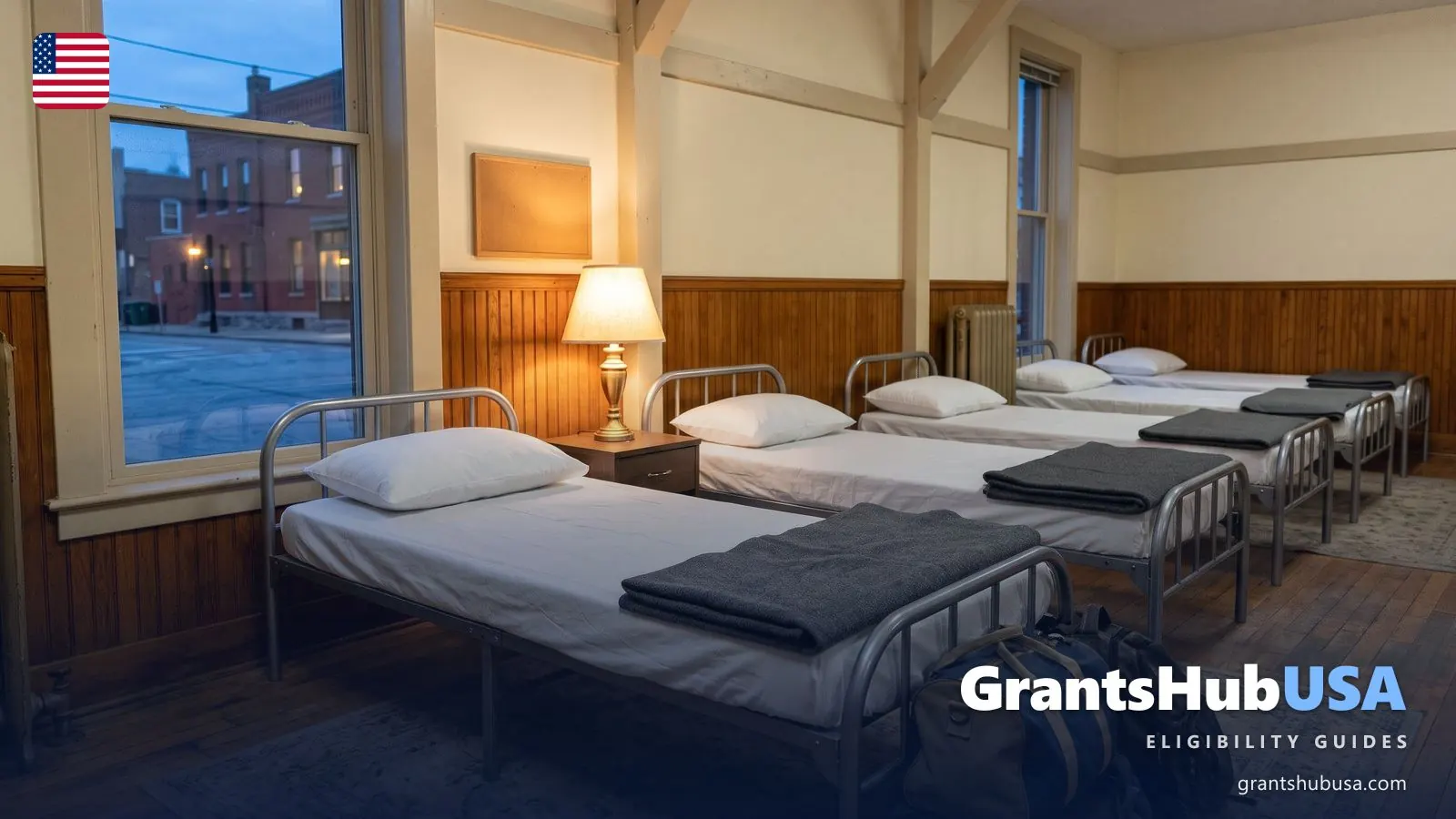
Shelters vary a lot. Some are one large room open overnight only. Others hold a family in a private room for weeks. Ask about check-in time, whether you can stay during the day, curfew, storage for belongings, and whether partners, older children or pets can stay with you.
If a shelter turns you away because it is full, ask the staff to call the next option for you, or to log your contact so coordinated entry can reach you. Then call 211 back. Being turned away once does not end your eligibility anywhere else.
4. Ask whether a motel or hotel voucher is available
A motel voucher is a short paid stay that a local agency arranges when no suitable shelter bed exists. HUD’s ESG rule lets programs pay for “a hotel or motel voucher” only “where no appropriate emergency shelter is available.” Local governments, charities and the VA’s SSVF program fund vouchers too.
The ESG wording sits in 24 CFR 576.102. “No appropriate shelter” can mean no beds at all, or no beds that fit your household, for example a large family when only single-adult beds are open, or a person whose disability makes a crowded dorm unsafe.
ESG-funded family shelters also may not turn a family away because of the age of a child under 18.
You usually cannot apply for a voucher by yourself. It is given by an outreach worker, coordinated entry staff or a caseworker after an assessment. Ask directly: “Are any motel vouchers available, and who can authorize one?”
Vouchers are short by design. The point is to bridge a gap while a shelter bed or permanent place opens. Use the time to complete your housing assessment and gather documents, because the stay will not be extended just because you are there.
Be careful with a motel stay you pay for yourself. Under 24 CFR 576.2, a low-income household in a motel not paid for by a charity or government program counts as “at risk” rather than homeless, which can change what you are offered first. Tell the assessor who pays.
5. Rapid rehousing: help moving straight into a lease
Rapid rehousing pays some or all of your move-in costs and rent for a limited time so you can leave a shelter, car or street quickly for your own lease. Under ESG it can cover up to 24 months of rent in any 3-year period, plus deposits, utility costs and moving help.
HUD’s ESG regulation defines it as help to “move as quickly as possible into permanent housing and achieve stability in that housing.” You reach it through coordinated entry, not by applying to a landlord.
What ESG rapid rehousing can pay, by rule:
- Short-term rent of up to 3 months, or medium-term rent of more than 3 and up to 24 months.
- A one-time payment of up to 6 months of past-due rent, with late fees.
- A security deposit of no more than 2 months’ rent, and last month’s rent if a landlord requires it.
- Utility deposits, and up to 24 months of utility bills including up to 6 months past due.
- Moving costs, including storage fees for up to 3 months.
These are caps, not promises. Your local provider decides how much you get and for how long, and must re-check your eligibility at least once a year. Many communities taper the share they pay each month so you build toward paying the full rent yourself.
The chart below lines up the federal maximum stays and payment periods that come up in this guide. Each one is a ceiling set in regulation or by the funding agency. Local programs often give less.
Rapid rehousing is not the only option you may be offered. HUD’s June 1, 2026 Continuum of Care announcement included “a $1.3 billion investment in new projects, with a priority for Transitional Housing and Supportive Service projects.”
In some areas, a transitional housing bed may come up sooner, so ask which programs have openings.
6. Fleeing abuse: domestic violence shelters
Call the National Domestic Violence Hotline at 1-800-799-7233 or text START to 88788. It is free, confidential and open 24/7. Advocates offer crisis support, safety planning and referrals to local programs, including confidential shelters whose addresses are not published.
Be clear about what the hotline does and does not do. Its help page says it “does not provide direct financial assistance to individuals (such as cash support, hotel vouchers, transportation vouchers, etc.)” but “can connect you with community resources” that may.
Federal rules protect survivors inside the general shelter system too. ESG shelters may not deny you a bed or remove you because you are or have been a victim of domestic violence, dating violence, sexual assault or stalking, if you otherwise qualify.
Coordinated entry has to account for you as well. Each CoC needs a written policy for people “fleeing, or attempting to flee, domestic violence” who seek help outside victim service providers. You can ask any access point how that policy works and whether you can be assessed without sharing your location.
If your phone or car may be tracked, call from a phone the other person cannot see, or ask a hospital, library or police station to help you make the call.
7. Under 18 or a young adult: runaway and youth shelters
Young people can call, text or chat the National Runaway Safeline at 1-800-786-2929, which says it is available 24/7 and confidential. Federally funded Basic Center programs give youth up to age 18 emergency shelter, food, clothing and counseling for up to 21 days.
The Administration for Children and Families says Basic Center programs serve up to 20 youth at a time and work to reunite young people with family “whenever possible.” They are separate from adult shelters, so a 16-year-old should not be sent to an adult dorm.
The Safeline also runs Home Free. Per the National Runaway Safeline, it helps “young people ages 12-21 return safely to a confirmed known adult or available safe place” at no cost to the young person. Call the main number to start.
Young adults over 18 use the regular coordinated entry system, but many CoCs run separate youth access points and youth-only rapid rehousing. When you call 211, say your age; it often changes which door you are sent to.
8. Veterans: the VA call center and SSVF
A veteran with no place to stay, or one about to lose housing, can reach a trained VA counselor at 877-424-3838, the National Call Center for Homeless Veterans. There is no charge, the line never closes, and calls stay confidential. A relative, friend or community provider can also reach out for the veteran.
The call center page says a counselor will “identify urgent needs” and connect you with local VA staff. There is also a web chat; if it drops, the VA asks you to call.
The VA’s Supportive Services for Veteran Families (SSVF) grants pay nonprofits to rehouse veterans quickly and prevent homelessness for low-income veteran families. The SSVF page links a current provider list.
SSVF can also pay for a short emergency stay when no shelter bed fits and a rental is lined up but not ready. Under 38 CFR 62.34, that stay is capped at 72 hours for a single veteran unless beds are still unavailable, and 60 days for a veteran with a spouse or dependents, once every 2 years.
For longer-term help, HUD-VASH pairs a housing voucher with VA case management. Our HUD-VASH guide covers who qualifies and how referrals work, and the HUD-VASH program page has the short version.
9. Older adults and people with disabilities
Older adults, and the people helping them, can call or text the Eldercare Locator at 1-800-677-1116 for local aging services. People with disabilities can ask any housing program for a reasonable accommodation, such as a ground-floor bed or a quieter room, under Fair Housing Act rules.
The Eldercare Locator is run for the Administration for Community Living and connects callers with “services for older adults and their families.” Ask it for your Area Agency on Aging and for adult protective services if someone is being exploited or neglected.
For disability needs, federal fair housing rules at 24 CFR 100.204 make it unlawful to “refuse to make reasonable accommodations in rules, policies, practices, or services” when needed for equal use of a dwelling. Ask in writing if you can, and keep a copy.
Tell the assessor about every health condition and disability, including mental health and substance use. Your community’s written priorities decide the order, and the assessor cannot weigh what you do not share. A disability can also add a preference on voucher waitlists, which comes up in section 11.
If you live on SSI or SSDI, your income counts in the assessment. It also gives you something many programs want before they will place you: a steady payment you can show. Our seniors hub gathers the benefit guides for older adults on this site.
10. Locked out today? What your state allows
Whether a landlord can change your locks without a court order depends on your state. In California it is illegal to lock out a tenant to end a tenancy. In Texas a landlord may change the locks for unpaid rent only under strict notice rules, and must give you a new key at any hour.
California’s rule is Civil Code 789.3. A landlord may not, with intent to end the tenancy, prevent access “by changing the locks,” remove doors or windows, or remove your belongings without consent. A court can award up to $100 a day, and at least $250, per violation.
Texas is different. Texas Property Code 92.0081 lets a landlord change the locks of a tenant behind on rent, but only if the lease allows it and you got advance written notice (mailed at least 5 days before, or hand-delivered or posted inside at least 3 days before).
Even then, the Texas landlord must post a notice saying where to get the new key, and “must provide the new key to the tenant at any hour, regardless of whether or not the tenant pays.” If the landlord breaks these rules, a tenant can sue for one month’s rent plus $1,000, actual damages and attorney’s fees.
Other states have their own rules, and we have not listed them here. On the day of a lockout, do these things in order:
- Stay calm and do not force your way in. Photograph the changed lock, any notice on the door, and your belongings if visible.
- Call your local police non-emergency line and ask whether the lockout followed a court order. Only a court order lets a sheriff remove you in most eviction cases, so ask whether one exists.
- Call legal aid or your state’s tenant hotline (211 can give the number). A lawyer can tell you what your state allows.
- If you have no place to sleep while it is sorted out, call 211 again for tonight’s shelter and ask for coordinated entry.
11. After emergency housing assistance: get on longer-term waitlists in the first 30 days
Shelter and rapid rehousing are short. In your first month, also apply to public housing and Housing Choice Voucher (Section 8) waitlists at every housing agency you can. HUD says lists are long and you may need to apply to several, and you do not have to live in an agency’s area to apply.
The HUD voucher page says reaching the top depends on the number of vouchers, when you applied and preferences such as “veteran” or “disabled.” It also warns that failing to keep in touch with the agency “may result in removal from the waitlist.”
Some agencies also give a preference to people who are homeless; each sets its own list. Ask every agency whether it has a homeless preference and what proof it accepts; a letter from your shelter or coordinated entry worker often counts.
Our step-by-step Section 8 application guide covers forms, documents and how to find open lists, and the Section 8 program page explains how rent shares work once you are approved.
One program you may see in search results is the Emergency Housing Voucher. HUD issued 70,000 of them, but the program is ending.
Under HUD Notice PIH 2026-25 (September 29, 2026), families under lease on September 30, 2026 move to regular vouchers by the end of December 2026, and those cannot be reissued. Apply to regular waitlists instead.
Use the first 30 days for paperwork too. Replace a lost ID, Social Security card or birth certificate, and set up a mailing address a shelter or friend will hold for you. Every waitlist and lease application will ask for these.
Emergency housing assistance: tonight, this week, this month
Tonight, the steps are short: call 211, ask for coordinated entry, and go to the line for your group if one fits. Within a week, finish your assessment and ask about rapid rehousing. Within a month, get on every waitlist you can and keep your phone reachable.
Our emergency help hub and housing hub collect the other guides on this site in one place.
Related reading
Frequently asked questions
Call 211 and ask for tonight's shelter options and the coordinated entry contact for your county. Coordinated entry is the single intake for most local shelter, motel voucher and rapid rehousing money. If you are a veteran, call 877-424-3838; if you are fleeing abuse, call 1-800-799-7233.
Often, yes. For shelters funded by HUD's Emergency Solutions Grants, 24 CFR 576.500 says lack of third-party documentation must not prevent you from being admitted right away. Privately funded shelters set their own rules, so tell them on the phone that you have no ID and ask.
Under HUD's definition you qualify if you sleep somewhere not meant for people, such as a car or park, or stay in a shelter. You also qualify if you will lose your current place within 14 days, have no next place identified and lack the money or support to find one.
HUD's Emergency Solutions Grants can pay for a hotel or motel voucher when no appropriate shelter is available. Local governments and charities also fund vouchers, and the VA's SSVF program can pay a short emergency stay for veterans. A caseworker or coordinated entry worker usually authorizes them.
Under ESG rules, rapid rehousing can pay up to 24 months of rent during any 3-year period, plus deposits, utility bills and moving costs. Short-term help is up to 3 months. Local providers decide the actual amount and must re-check eligibility at least once a year.
No. The National Domestic Violence Hotline (1-800-799-7233, or text START to 88788) says it does not provide cash, hotel vouchers or transportation vouchers directly. Its advocates can connect you with local programs and shelters that may.
It depends on your state. California Civil Code 789.3 bars a landlord from changing locks to end a tenancy. Texas Property Code 92.0081 allows a lock change for unpaid rent only with lease terms and advance notice, and the landlord must give you a new key at any hour.
Sources & further reading
- 1eCFR: 24 CFR Part 576, Emergency Solutions Grants Program
www.ecfr.gov/current/title-24/subtitle-B/chapter-V/subchapter-C/part-576
- 2eCFR: 24 CFR 576.102, emergency shelter component (motel vouchers, family admission)
www.ecfr.gov/current/title-24/subtitle-B/chapter-V/subchapter-C/part-576/subpart-B/section-576.102
- 3eCFR: 24 CFR 576.2, definitions of homeless and at risk of homelessness
www.ecfr.gov/current/title-24/subtitle-B/chapter-V/subchapter-C/part-576/subpart-A/section-576.2
- 4eCFR: 24 CFR 576.500, documentation and immediate shelter admission
www.ecfr.gov/current/title-24/subtitle-B/chapter-V/subchapter-C/part-576/subpart-E/section-576.500
- 5eCFR: 24 CFR Part 578, Continuum of Care Program (coordinated assessment)
www.ecfr.gov/current/title-24/subtitle-B/chapter-V/subchapter-C/part-578
- 6HUD Exchange: HMIS data standard 4.19, Coordinated Entry Assessment
www.hudexchange.info/programs/hmis/hmis-data-standards/standards/common-program-specific-data-elements/419-coordinated-entry-assessment/
- 7HUD: Find Shelter
www.hud.gov/findshelter
- 8United Way 211
www.211.org/
- 9National Domestic Violence Hotline: Get Help
www.thehotline.org/get-help/
- 10National Runaway Safeline
www.1800runaway.org/
- 11ACF: Basic Center Program fact sheet
acf.gov/fysb/fact-sheet/basic-center-program-fact-sheet
- 12VA: National Call Center for Homeless Veterans
www.va.gov/homeless/nationalcallcenter.asp
- 13VA: Supportive Services for Veteran Families
www.va.gov/homeless/ssvf/
- 14eCFR: 38 CFR 62.34, SSVF supportive services and emergency housing
www.ecfr.gov/current/title-38/chapter-I/part-62/subpart-C/section-62.34
- 15Eldercare Locator (Administration for Community Living)
eldercare.acl.gov/
- 16eCFR: 24 CFR 100.204, reasonable accommodations
www.ecfr.gov/current/title-24/subtitle-B/chapter-I/subchapter-A/part-100/subpart-D/section-100.204
- 17California Civil Code 789.3
leginfo.legislature.ca.gov/faces/codes_displaySection.xhtml?lawCode=CIV§ionNum=789.3
- 18Texas Property Code Chapter 92 (Sec. 92.0081)
statutes.capitol.texas.gov/Docs/PR/htm/PR.92.htm
- 19HUD: Housing Choice Voucher tenants
www.hud.gov/helping-americans/housing-choice-vouchers-tenants
- 20HUD: Emergency Housing Vouchers
www.hud.gov/helping-americans/housing-choice-vouchers-emergency
- 21HUD Notice PIH 2026-25: tenant protection vouchers for EHV families (Sept 29, 2026)
www.hud.gov/sites/default/files/hudclips/documents/PIH-2026-25.pdf
Confirm current rules with the agency that runs the program before you apply.
How we checked this guide
Every rule, dollar amount, and deadline in this guide was checked against the sources above on .
- Sources21 primary, linked above
- PublishedNovember 13, 2026
- Last verifiedNovember 13, 2026
- IndependenceNot a government agency
Not legal, tax, or financial advice. GrantsHubUSA is an independent editorial site. We are not a government agency and we do not run these programs. See our full disclaimer.
More guides for your next step